The United States of Obesity
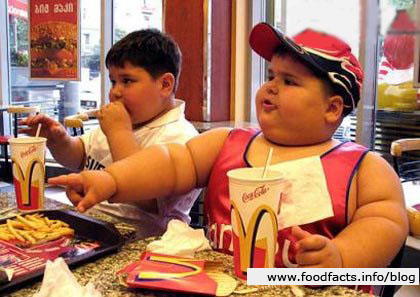
The general consensus of obesity experts and researchers is that humans evolved to live in a very different environment than that in which we find ourselves today. Because food was scarce, for hundreds of thousands of years, there was biological pressure to be able to store energy as fat for the lean times. Today, in the developed world, food is abundant, cheap and widely available, while there is very little physical activity required by typical daily life. Several factors contribute:
1) Urban and suburban designs that minimize the need for walking and physical activity.
2) Pressures to eat cheap and fast, which typically means a high-calorie, high-fat diet.
3) Lack of easy access to fruits, vegetables and nutritious foods in many residential areas.
4) Less physical activity at school and competition for leisure time from sedentary “screen time.”
So both our genetic make-up and the modern environment conspire to thwart our attempts at weight-loss. In other words, once you get fat it's really hard to get lean again, so prevention is paramount. Compounding the problem is the fact that the obesity epidemic begins early – many eating and exercise habits are formed in the first few years of life. While many obese infants (under age 2) do eventually thin out, they are three times more likely to be obese at age seven. As infants grow up, if they do not lose weight, they are increasingly more likely to remain obese into adulthood - children obese at age seven have a 40% chance of becoming obese adults and that number jumps to 70% for obese pre-teens.
 In the past 30 years, child overweight and obesity levels in the US have more than doubled and more than tripled among adolescents. According to a 2006 study published in the Journal of the American Medical Association, nearly 25 million young people under age 17 are overweight or obese, 1/3 of the 74 million in that age group. Trends in adult populations have been similar and today 2/3 of American adults (and 57% of New Yorkers) are considered overweight and 30% obese (21% of New Yorkers) – creating a bonafide national health crisis. The accompanying avalanche of adverse social, economic and health consequences costs an estimated $117 billion nationwide each year and over $6 billion in the state of New York alone. Diabetes (particularly Type 2), hypertension, cardiovascular disease, sleep apnea, asthma, orthopedic problems, gallstones, headaches, kidney problems, dyslipidemia, glucose intolerance, arthritis, immune system deficiencies, psychological, emotional and self-esteem problems – the list goes on and on. Simply put, the risk of just about every disease increases in proportion to the extra fat the body has to lug around - especially the big three killers: cancer, heart disease, and stroke.
At School
Children spend a considerable amount of time in school, and being overweight or obese – primarily because of the stigma attached to it – puts children at risk for developing serious psychological burdens that adversely affect their learning and achievement. While family is the primary agent of socialization, schools are the secondary agent and play a huge role in the development of a child's self-concept and their internalization of social expectations. Public school is generally the first interface between children and the governmental apparatus of policy through education. School-based interventions do not have to contend with the inherent privacy and parental authority of home life, making problems more tractable and more amenable to effective policy-making. Furthermore, recent research suggests that physical activity during the school day – whether free play or PE - confers significant health benefits for overweight children and boosts student achievement of all children, regardless of weight profile.
 Therefore, though schools cannot single-handedly counteract all of the factors that affect a child's health and weight, they are an important piece of the puzzle and they can be powerful motivators for helping children to adopt healthy lifestyles. With recent national guidelines recommending that young people get at least 60 minutes of physical activity per day, many states, including New York, have tried to tackle the twin problems of childhood inactivity and obesity by refining or expanding physical education/activity requirements during and after the school day. Other states have begun reporting students’ body mass index scores to parents.
A New Brand of Physical Education
On May 2, 2007 New York City schools chancellor Joel Klein accepted the Ross Merrick National Recognition Award in honor of the district's commitment to improving physical education. A key component of the new curriculum is the NikeGO PE program which ensures 30 minutes of constant “non-face-threatening” physical activity for every student. By shifting away from competitive traditional team sports and elimination games like dodgeball - where students spend much of their time waiting in line, waiting for the next game or just sitting out entirely - the aim is to appeal to a wider range of children who may not have the eye-hand coordination skills to excel at throwing, catching, shooting etc.
 The New York Times recently highlighted the success of a similarly minded PE program built around the Japanese video game sensation “Dance, Dance the Revolution” (DDR). As a song plays, arrows pointing in one of four directions - forward, back, left, right - scroll up the screen in various sequences and combinations, requiring the player to step on corresponding arrows on a mat on the floor. Several hundred schools in at least ten states (including 8 schools in Chesterfield, NY) are now using DDR as part of their PE curriculum with more than 1,500 schools nationwide expected to be using it by 2010. Most importantly students absolutely love DDR, and as one student put it, “You don't have to be good at it to get a good workout.” So while “screen time” has long been blamed for contributing to bulging waistlines – with innovative ideas - media and technology's ability to mesmerize the younger generation can also be harnessed to fight childhood obesity.
Why are Americans so Fat?
In America today, the obesity epidemic has hit all races and all classes. However, Dr. Drewnowski of the University of Washington's Nutritional Sciences program found that the most reliable predictor of obesity in America today is a person's wealth. Drewnowski went to supermarkets and found that consumers can get, by far, the most calories per dollar in the processed food and drink section. A dollar can buy 1,200 calories of cookies or potato chips but only 250 calories of carrots, 875 calories of soda but only 170 calories of orange juice. As a rule, processed foods are more “energy dense” than fresh foods: they contain less water and fiber but more added fat and sugar, which makes them less filling and nutritious but more fattening, which is why we call them “junk food.” In other words, if you are eating on a budget, the most rational economic strategy is to eat badly - and get fat. Drewnowski goes on to explain the pricing mechanisms, asserting that “Twinkies,” for example, are not simply cheaper to produce than carrots. On the contrary, they involve at least 39 different ingredients as well as elaborate manufacturing, packaging and marketing, whereas carrots are just pulled from the ground, usually without even being washed. He claims that the US farm bill, not the free market, sets the rules for the American food system through $25 billion of annual subsidies. Twinkies carbohydrates and fats come primarily from processed corn, soy and wheat, three of the five commodity crops (rice and cotton are the others) most heavily subsidized by US agricultural policy. Consequently, our food system is awash in added sugars (derived from corn) and added fats (derived mainly from soy), as well as dirt-cheap meat and milk (derived from both) - while the farm bill does almost nothing to support farmers growing fresh produce. The nation's agricultural policies date to the 1930s when undernourishment was a public health problem, subsidies increased production and eventually created an excess which was then fed to school children in what seemed like a win-win strategy.
 Today, Drewnowski contends, the farm bill essentially treats our children as a human Disposall for all the unhealthful calories that subsidies have encouraged American farmers to overproduce. Congress, the media, and the general public, however, pay little attention to the farm bill reauthorization every five years, because most of us think of “farming” (as opposed to a “food bill”) as an increasingly quaint activity that involves no one we know and in which few of us have a stake.
Marketing Junk Food to Kids
At least 30 percent of the calories in the average American child's diet derive from sweets, soft drinks, salty snacks, and fast food. American children spend nearly $30 billion of their own money annually on junk foods, and since 1994, ¾ of the new children's food products put out by US companies have been candies, chewing gum, sweets or salty snacks. A 2004 Institute of Medicine (IOM) study found that $10 billion of junk food marketing intentionally targets young children, strongly influencing their food preferences, requests and consumption. The study lists numerous firms that conduct marketing research focused on preschool children to elucidate the psychological underpinnings of children's food choices. Recent public pressure has prompted many companies to scramble to support health and exercise programs and renounce advertising directed at young children.
So, why are Americans fat? At least partially, because the consumer landscape is different in America. 1) Massive subsidies support the processed food industry and 2) American food marketing sucks in children as young as possible - a practice that is more tightly regulated in countries like Australia, Sweden and around 50 other countries around the world.
Public Awareness and Education
Even if we do everything right, in our schools and with our food system, to make our children healthy, without reinforcement from parents we may be fighting a losing battle. Despite a fivefold increase in media coverage of obesity-related issues since 1999, most parents do not perceive obesity as a health problem for young children, especially if there are no concomitant medical problems. While nearly all Americans would acknowledge that smoking is 'very bad' for your health and certainly bad for school children, the public perception that obesity is somehow a less serious threat, despite mountains of medical evidence to the contrary, stymies public health efforts. In the past, anti-smoking and safety belt use campaigns began by targeting teenage smoking and mandating child-safety seats Children, who are viewed as more vulnerable and less responsible for their behavior, served as an initial rallying point for spreading public awareness of the dangers of obesity and subsequently mobilizing support for policy interventions. Perhaps by addressing childhood obesity more attention will eventually come to adult obesity as well.
Who is Becoming Obese?
Across the nation and in New York, poor minorities have been hit disproportionately by the epidemic. By the age of 3, more than 40% of kids from low-income families in NYC are already at an unhealthy weight and one in four are already obese. Hispanics had the overall highest obesity rate, followed by Blacks (with a much higher rate among black females) and Whites. While among teens, Blacks had the highest rate, followed by Hispanics and Whites.
 Many of these children are poor and live in neighborhoods where outdoor play is unsafe and access to fresh fruits and vegetables is limited. In many cases, the environment makes it almost impossible for them to choose healthy lifestyles.
What Can Policy Do?
Though many Americans still believe that obesity is beyond the scope of public policy, health officials in New York City and elsewhere, have implemented and are considering a wide range of policy approaches. To prevent the onset of chronic conditions, facilitate a healthier diet and promote more exercise beginning in childhood, the Health Dept. is working with the Administration for Children's Services and the Dept. of Education, trying to change the city health code to give the department tighter control over day care centers. More than 600,000 booklets have been distributed to parents to help provide guidance about keeping their children fit and urging them to more closely monitor their child's exercise, television viewing, and food choices.
 The NYC Health Dept. launched its Activ8Kids program with the basic daily principles: 5 fruits and vegetables, 1 hour of physical activity and 2 hours or less of TV or 'screen time' each day. Activ8Kids also started community based programs for children and adults that reach out to school staff, physicians, health care providers, childcare providers, children and parents to try to make maintaining a healthy weight a priority for everyone. Meanwhile, state government began offering programs like: Steps to a Healthier NY, Just Say Yes to Fruits and Vegetables, Eat well, Play Hard, and Minority Health Mini-Grants. Other policy measures applied to society at large. In December of 2006 Mayor Bloomberg made NYC the first major metro area to ban the use of trans fats (a particularly artery-clogging form of cholesterol linked to heart disease) in restaurants, and mandated fast food outlets to display nutrition information. In April 2007, Governor Spitzer announced his “Healthy Schools Act,” designed “not only to fight childhood obesity, but also to introduce children to the healthy lifestyles they will need for a healthy future – eating nutritious foods, consuming balanced meals and staying physically active.” The act bans sales of candy, fast food and soda in schools, ensures nutritionally balanced school meals6 and toughens standards for physical activity. The act also mandates 30 minute recess periods on days when there is no PE class for elementary and middle schools students and prohibits schools from disciplining a student by taking away such recess period. Needless to say, there are a wealth of policy options.
In the 90s, the Robert Wood Johnson Foundation led the anti-smoking movement. $446 million of contributions underwrote research, prevention and smoking-cessation programs, and increased awareness of smoking’s dangers – playing a critical role in the decline in smoking in America. In April, 2007 that same foundation pledged $500 million to address another problem many believe to be intractable: childhood obesity. The foundation plans to invest in programs to improve access to healthy food, encourage the development of safe play spaces, increase research to enhance understanding of obesity and prod governments into adopting policies to address the problem, among other things. The foundation crafted recommendations on nutrition that emphasize monitoring portion sizes and limiting what children drink (children ages 1 to 6 should drink only water, milk and 100 percent fruit juice, avoiding soda and beverages with added sugar). Breast feeding was also encouraged as a way to reduce the chances of obesity for both the child as well as the mother by helping return mothers to their pre-pregnancy weight while reducing their risk of developing diabetes later in life. Finally, the foundation advocated setting healthy examples for children: offering healthy food choices and opportunities to be physically active, discouraging eating in front of the television, and limiting “screen time” that keeps children from moving. Other private advocacy groups like the NY Junior League play a part as well, by lobbying for legislation in Albany, putting on healthy children workshops, and trying to persuade supermarket operators to return to poor neighborhoods.
Conclusion: Making Sure We Get it Right
Childhood obesity is such a pressing problem that there is a temptation to throw ourselves at it headlong, there is a sense of fear, desperation and concern that spills over into calls for various interventions that look sensible but may not be effective. Some discouraging studies have brought many researchers to the conclusion that less-than-comprehensive school-based efforts to fight childhood obesity may not be enough. One study, an eight-year, $20 million project sponsored by the National Heart, Lung and Blood Institute, followed 1,700 mostly Native American third graders, a group that is at high risk for obesity. Students were divided into two groups, one subject to intensive intervention, the other left alone. Though students in the intervention group ate less fat and knew more about nutrition, it was not enough to change their body weights. A second study, of over 5,000 children had a similar design and the same results: all that help made no difference in the children's weights. Some are now claiming that it is necessary to change children's total experience. Not only the school, but the family, the community, the grocery store. There is a need for something deeper - a massive coordinated effort that generates mutually reinforcing school, social service and community policy. The epidemic of childhood obesity is already costing the country billions of dollars and millions of human lives. Without comprehensive wrap-around policy implementation to make our young people healthy and strong – not only will we lose economically - the younger generation will live sicker and die younger than their parents because of obesity.
Here is a great site with recommendations for what you can do to get healthier.
and here is an article about how genetics can trump diets and how your metabolism depends on where your weight is in relation to your natural weight range.


Comments